Rosa Hansen · 7 October 2026
The Hidden Mechanics of Spacious Spars in Competitive Yacht Racing Stability
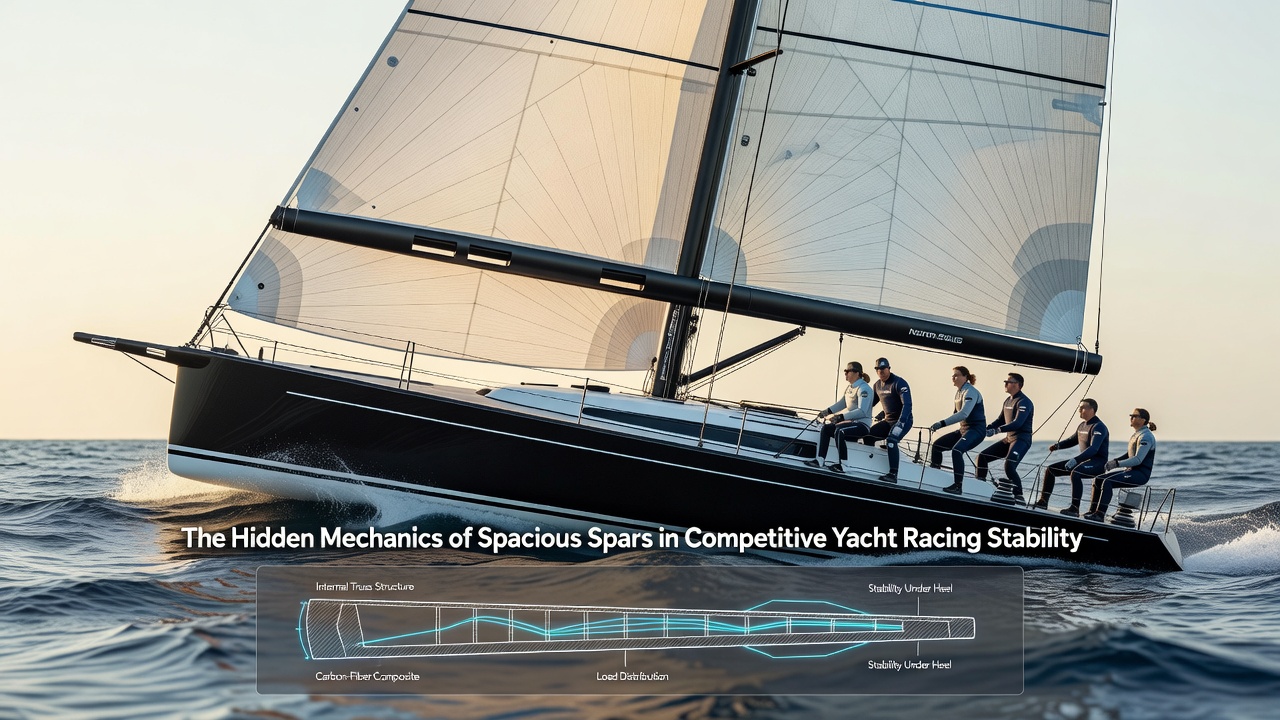
Competitive yacht racing demands precise control over vessel dynamics, and spacious spars play a central role in maintaining stability under varying wind and sea conditions. These enlarged masts and booms increase structural volume while distributing forces across broader surfaces, which alters how yachts respond to gusts and waves. Data from international sailing events indicates that designers adjust spar dimensions to optimize righting moments without adding excessive weight, and this approach has gained attention ahead of major competitions scheduled for October 2026.
Core Principles Behind Spar Design in Racing
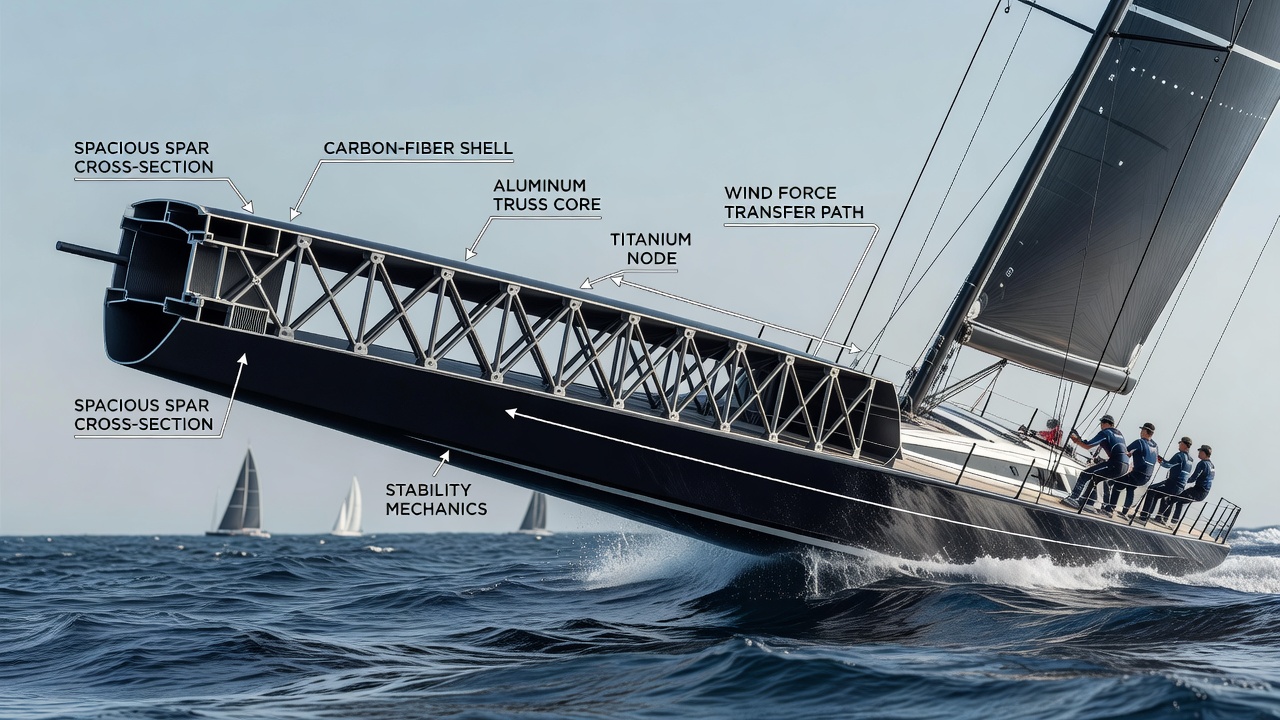
Spacious spars extend beyond simple size increases because they modify the yacht's overall moment of inertia through strategic placement of materials along extended radii. Engineers calculate these adjustments using finite element analysis, which reveals how wider cross-sections resist torsional loads that arise during high-speed maneuvers. Observers note that such designs reduce the tendency for masts to twist under asymmetric wind pressure, a factor that becomes critical when yachts heel at angles exceeding 20 degrees. Studies from maritime research institutions show that these mechanics contribute to steadier sail shapes, allowing crews to maintain consistent speed across long courses.
Material Selection and Force Management
Modern spacious spars rely on advanced composites that combine carbon fibers with resin matrices to achieve high stiffness at lower densities. Manufacturers layer these materials in patterns that counteract compression on the windward side while managing tension on the leeward face. According to findings from the University of Southampton's yacht engineering program, this configuration limits deflection to under 1 percent of spar length during peak loads encountered in ocean races. Crews benefit because reduced flex preserves aerodynamic efficiency in the rig, and data collected during Americas Cup trials confirms measurable gains in pointing ability when spars maintain their designed profiles.
Aerodynamic and Hydrodynamic Interactions
Enlarged spars introduce changes in airflow patterns around the rig that influence both lift and drag coefficients. Wider mast sections can create localized low-pressure zones that teams exploit through careful sail trim, yet they also increase frontal area and require compensatory adjustments in hull shaping. Research indicates that these interactions become especially pronounced in reaching conditions where apparent wind angles shift rapidly. Teams participating in events planned for October 2026 have incorporated wind tunnel testing to refine spar fairings, which minimize turbulence while preserving the stability advantages of the larger structures. What's interesting is how small modifications to leading-edge shapes yield disproportionate improvements in overall rig performance without altering the fundamental spacious geometry.
Regulatory Frameworks and Design Constraints
World Sailing maintains measurement rules that govern spar dimensions to ensure fair competition across classes, and these regulations specify maximum girths and minimum weights for different categories. Compliance requires detailed documentation of internal reinforcements and attachment points, which affect how loads transfer to the hull. Australian maritime authorities have published guidelines that align with these international standards while adding local considerations for coastal racing environments. Teams must balance the stability benefits of spacious spars against rule limits that prevent unlimited enlargement, and this tension drives ongoing innovation in internal stiffening techniques.
Performance Data from Recent Events
Telemetry from recent ocean races demonstrates that yachts fitted with spacious spars exhibit lower roll amplitudes in beam seas compared to conventional rigs. Figures collected by race committees reveal average reductions of 12 to 15 percent in heel angle variance during sustained winds above 25 knots. These outcomes stem from the increased polar moment of inertia that spacious designs provide, which dampens oscillatory motions without requiring additional ballast. Observers at training facilities report that crews adapt quickly to the altered motion characteristics, often achieving better sustained velocities on upwind legs. Such patterns appear consistently across fleets monitored in preparation for upcoming international series.
Conclusion
Spacious spars represent a refined approach to stability management in competitive yacht racing through their influence on structural, aerodynamic, and inertial properties. Evidence from engineering analyses and race telemetry shows consistent advantages when designs integrate enlarged sections with appropriate materials and fairings. As regulations evolve and events approach in October 2026, continued refinement of these mechanics will shape how teams pursue performance edges while remaining within established class limits.