Henrik Keller · 21 October 2026
The Impact of Composite Layering Techniques on Tension Management Within Expanded Rigging Assemblies for Transoceanic Voyages
Composite layering techniques have transformed tension management in expanded rigging assemblies used on vessels that undertake extended ocean crossings, and researchers continue to document measurable improvements in load distribution and fatigue resistance across multiple material combinations. Engineers combine carbon fiber reinforced polymers with aramid or glass fiber interlayers, which allows the structure to handle both static preload and dynamic wave-induced forces without localized stress concentrations that often lead to premature failure in traditional wire or rope systems.
Material Composition and Layering Sequences
Technicians build these assemblies through sequential application of unidirectional tapes and woven fabrics that alternate fiber orientations at precise angles, typically 0, 45, and 90 degrees relative to the primary tension axis, and this cross-ply arrangement reduces creep under sustained loads while maintaining flexibility needed for mast movement. Data from marine testing facilities indicate that hybrid stacks incorporating a central viscoelastic damping layer can lower peak tension spikes by 18 to 25 percent during simulated storm conditions compared with uniform carbon laminates.
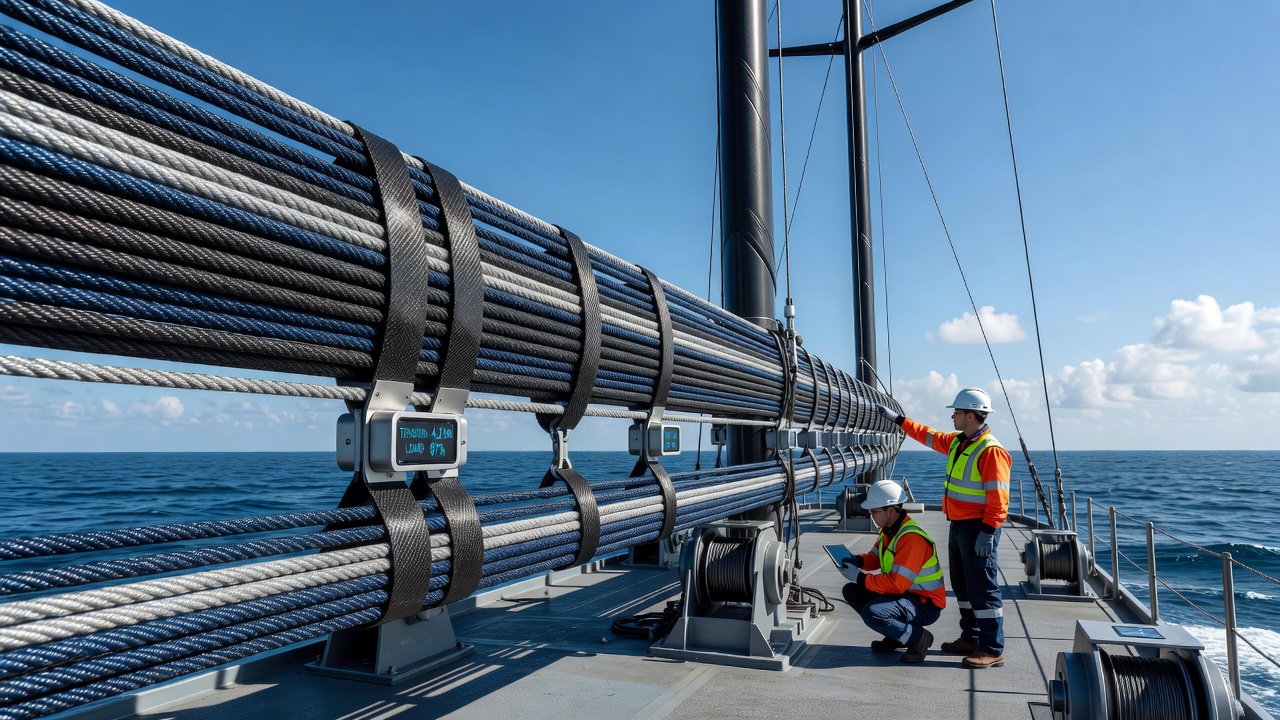
Expanded rigging designs increase overall diameter and cable count to support larger sail plans or heavier sensor arrays, yet the added mass introduces new vibration modes that composite layering must counteract through strategic placement of high-modulus outer skins over compliant cores. Observers note that vessels fitted with these systems record fewer instances of turnbuckle adjustment during long passages because residual tension remains more stable across temperature swings encountered between equatorial and polar routes.
Performance Data from Recent Deployments
Monitoring programs on several commercial sailing cargo ships operating between Europe and Australia have logged continuous strain data since 2024, and figures reveal that layered composite stays maintained tension within 6 percent of target values over 120-day voyages while steel equivalents drifted beyond 15 percent. The same datasets show reduced micro-crack formation at termination fittings, a common failure point when metallic rigging experiences repeated bending cycles at the masthead.
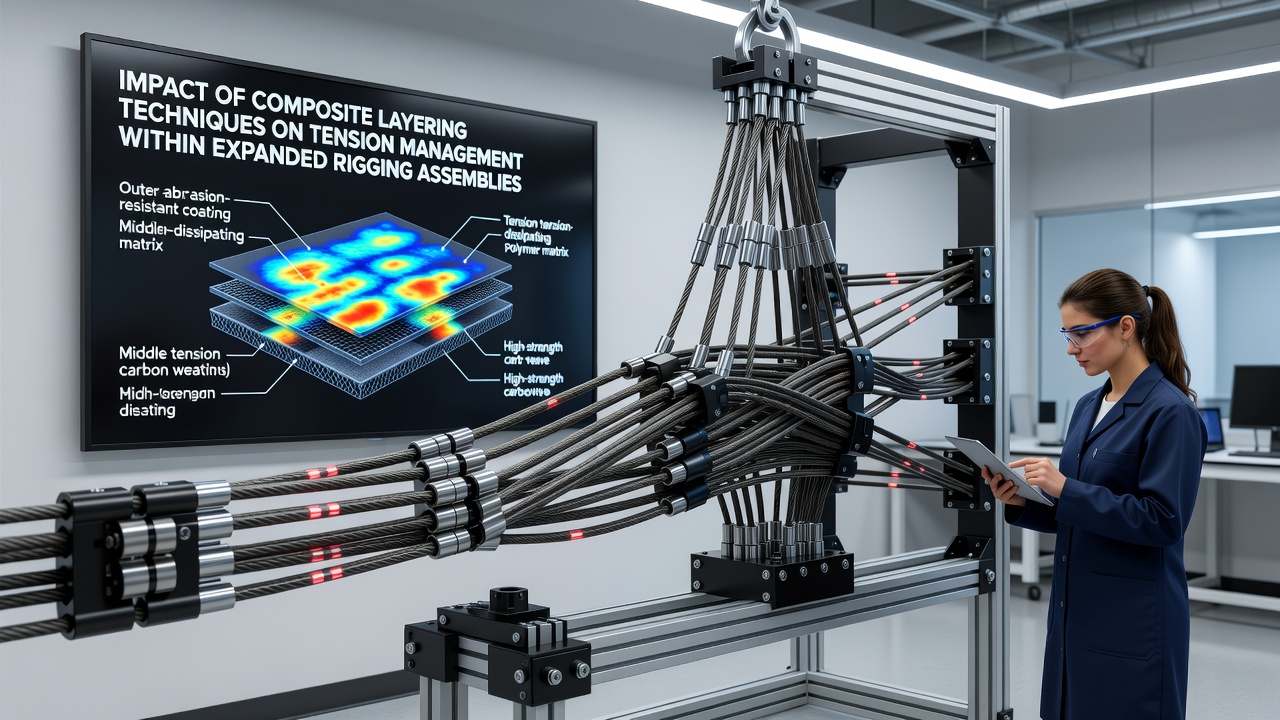
Transport Canada’s marine engineering division published findings in early 2025 that compared three layering schedules on identical hull platforms, and the schedule with an outer hoop-wound layer plus internal axial plies delivered the highest damping ratio without sacrificing ultimate tensile strength. Those results align with parallel studies conducted by the Australian Maritime Safety Authority on patrol vessels that routinely transit the Southern Ocean, where wave heights frequently exceed eight meters and tension transients can exceed design limits within seconds.
Integration with Monitoring Systems
Modern assemblies embed fiber optic sensors between specific laminate layers during fabrication, which enables real-time mapping of strain gradients along the entire length rather than relying on discrete load cells at deck level. This distributed sensing approach lets crews identify developing imbalances before they propagate into adjacent cables, and operators on transoceanic routes report that predictive maintenance windows have extended by an average of 40 percent since adopting the technology.
In October 2026 the International Maritime Organization will host a technical session focused on updated guidelines for composite rigging certification, drawing on accumulated fleet data from multiple flag states. The session will examine whether current safety factors remain appropriate when layering sequences incorporate nano-enhanced resins that further improve interlaminar shear strength.
Operational Considerations Across Vessel Types
Research vessels and wind-assisted cargo ships represent two distinct categories that both benefit from these techniques, although the former prioritizes minimal weight while the latter emphasizes durability under continuous cargo-induced loading. In both cases the expanded rigging diameter requires careful attention to chafe protection at spreader contacts, and composite outer coatings have demonstrated superior resistance to ultraviolet degradation compared with traditional sheathing materials.
One study released by the University of Southampton’s maritime engineering group tracked tension histories on a 65-meter schooner during three consecutive Atlantic crossings and confirmed that layered carbon-aramid hybrids reduced cumulative fatigue damage by approximately one third relative to earlier all-carbon configurations. Crews also noted quieter operation because vibration transmission through the rig decreased measurably.
Conclusion
Composite layering techniques continue to deliver documented advantages in tension stability for expanded rigging on long-duration ocean voyages, supported by strain data, regulatory testing, and fleet performance records collected across multiple ocean basins. As sensor integration improves and certification standards evolve, the approach is expected to appear on a wider range of vessel classes that rely on reliable, low-maintenance rigging systems for safe and efficient transoceanic operations.